Science communication at Fermenting Souls Festival in Munich (2 August 2026)
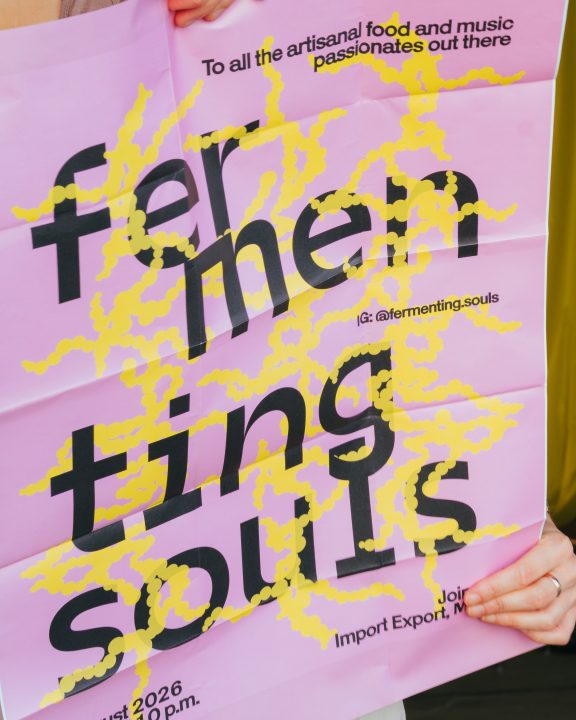
Mara Linden recently participated in the culture corner programme of the Fermenting Souls festival in Munich. Building on her research project on fermentation and sourdough, and her experience with fermenting, baking and organising fermentation workshops, Mara contributed some of her practical and academic insights in conversations with fellow academics and practitioners to enrich the festival’s cultural side of the programme.
x
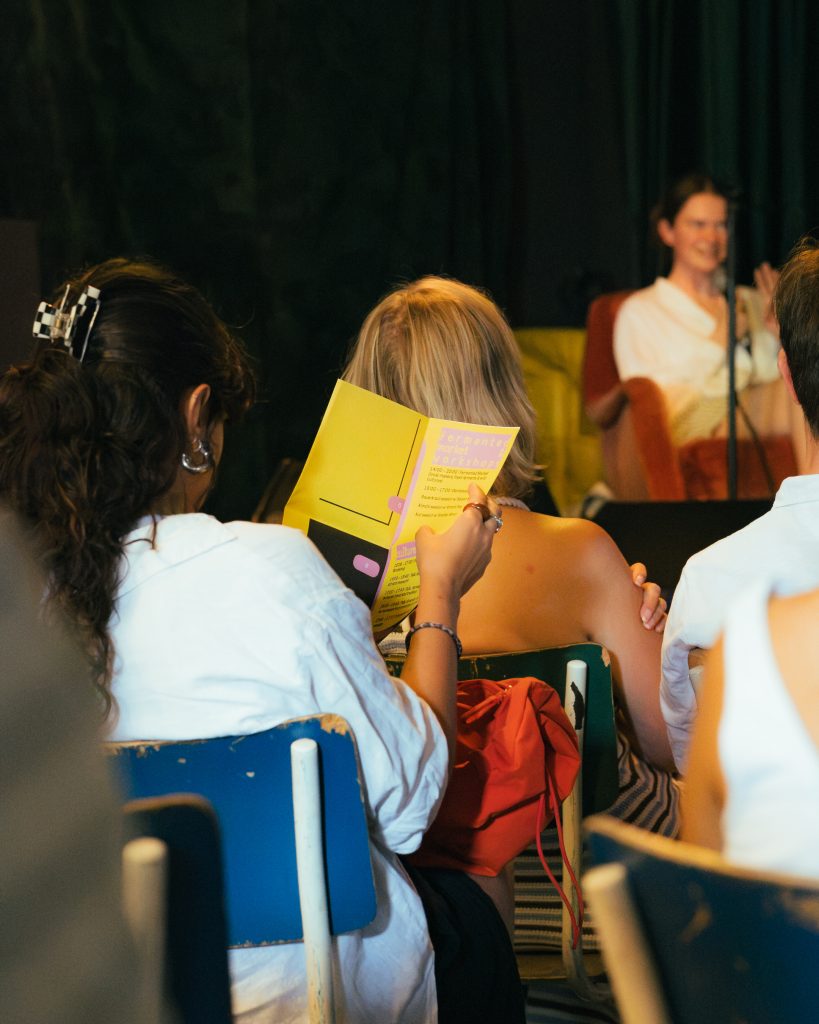
Photos: Darja Voloshina/Fermenting Souls
It’s midday on a hot August Sunday, and at Import Export in Munich, ‘Fermenting Souls’ is taking place, a food and music festival around all things fermented. Outside, in the courtyard, there is a market of food tables where you could try pickles, sourdough bread, natural wines and non-alcoholic proxies, kombucha and cultured butter. In the middle is a stage where different artists are playing music, from a more relaxing sound earlier in the day to more forward-driven electronic music later in the evening to dance to. If you’re hungry, you could get vegan tacos or blueberry icecream from a food stand. A hidden gem in the backyard is the mini bar that serves (non-alcoholic) mini drinks of different variety in tiny glasses, along with popcorn topped with miso. If you wanted to escape the sun, there is also things happening inside. Under the title ‘culture corner’, visitors can listen to three talks, take part in a ‘ferment-action’ workshop or two tasting tables, and get creative in the crafty corner. After all, the festivals’s motto is “not just a festival, not just a market”, so it feeds guts, souls and brains, too.
My role at this festical is to be a part of the culture corner programme of Fermenting Souls. Along with fellow academics and practitioners, I’m invited to speak about my research project on fermentation and sourdough, and my experience with fermenting, baking and organising fermentation workshops. The culture corner thus provides some practical, theoretical and academic perspectives on fermentation, culture, food and art for the festival’s cultural side of the programme.
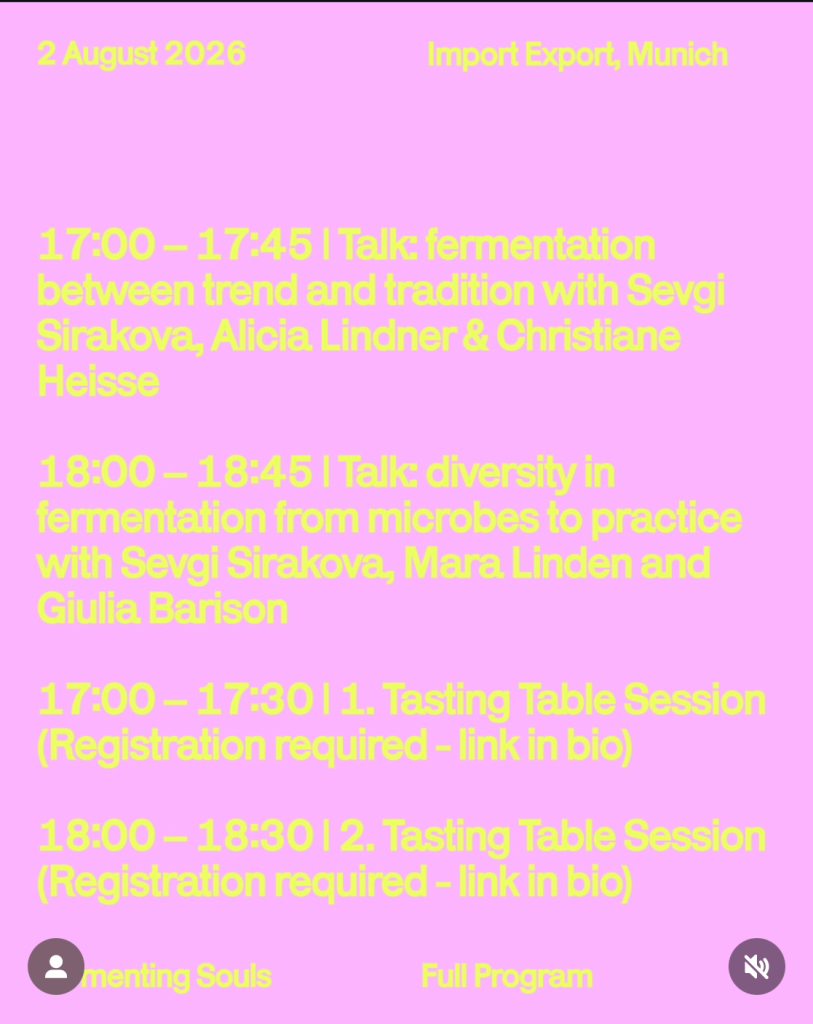
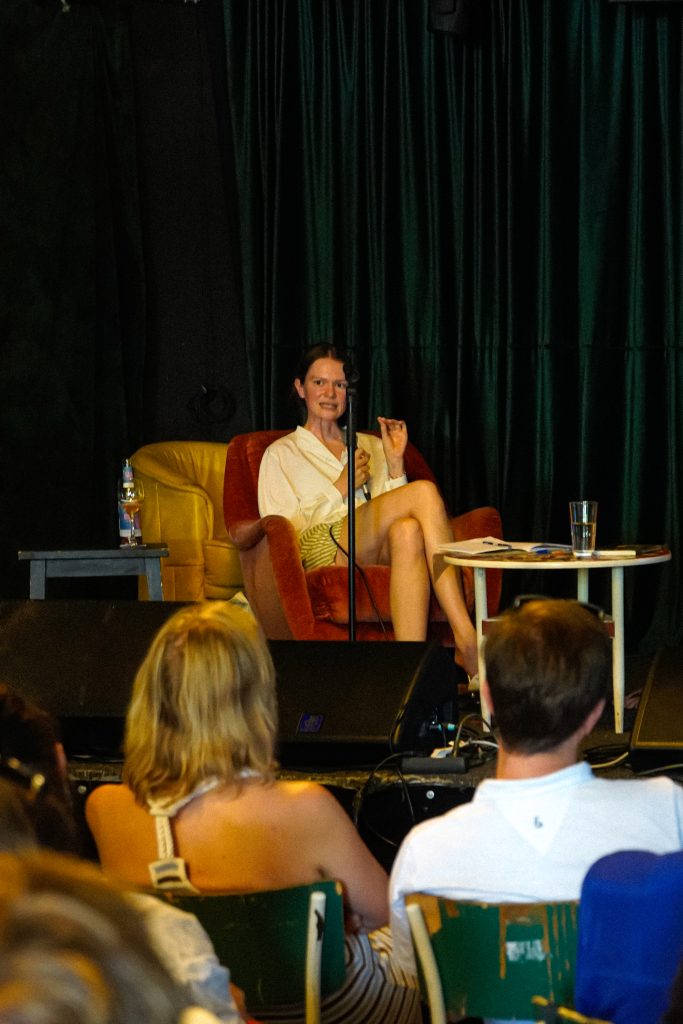
For the culture corner’s first talk, we sit down on the comfy chairs on stage in front of several interested listeners. Penelope Volinia, PhD candidate in the ‘Off the Menu’ research training group at the University of Augsburg, and I will talk about ‘Fermentation in art and research’. We briefly introduce ourselves and our projects, before we get into the conversation about creative approaches to researching fermentation, embodied practices and visual learning, conserving and passing on knowledge, and our own research-practice entanglement. The chat turns from incorporating visual material into our analysis to researchers curating and making art themselves – such as Penelope’s past residencies together with chefs and artists, or the upcoming contribution to an exhibition on sourdough that I prepare together with Rivka Saltiel and Julia Walk. We then open the conversation to questions and comments from the audience, which brings us to also think about fermenting and food-making as practices of art in themselves. Another person asks for our inspirations in our fermentation practice – we both mention the variety of fermentation books, some beautifully curated but not very beginner-friendly in terms of recipes, some more practical and accessible. Nevertheless, we both emphasize the importance of doing and experiencing fermentation, preferably together with others. Too soon, our time is up and we need to finish the conversation, as further programme events are happening.
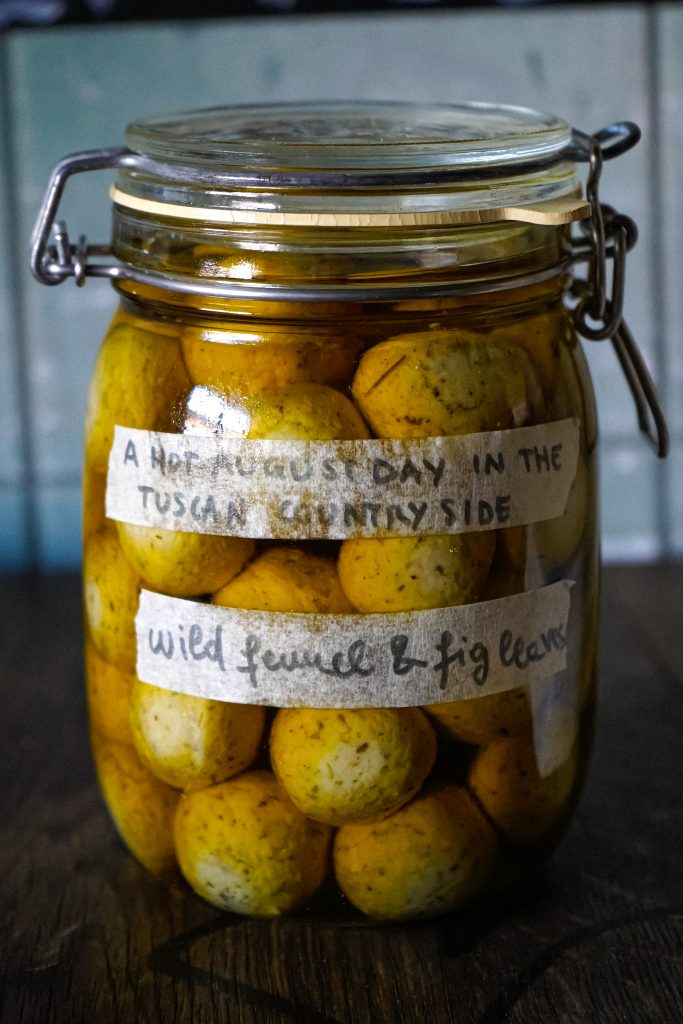
Unfortunately, I miss the second talk, ‘Fermentation between trend and tradition’, (between Christiane Heisse, University Bayreuth, Alicia Lindner, food blogger and influencer, and Sevgi Sirakova, Rachel Carson Center), where the three discuss the tensions between fermentation as a trend and its traditional roots (see also Christiane’s and Sevgi’s comment on reclaiming traditional foods for a degrowth food future). In the meantime, I briefly browse the market and then join Penelope Volinia’s tasting table on wild ferments. Penelope brought a selection of ferments that she prepared with foraged foods: first, we try a fermented green plum that looks almost like an olive and has a fresh, tangy and salty taste. Then, we move on to Kechek, also called poor people’s cheese, a fermented bulgur seasoned with wild fennel and fig leaves and stored in olive oil which Penelope has beautifully titled ‘A hot August day in the Tuscan countryside’ (pictured on the right). Lastly, we try cornel cherries that Penelope picked from trees around Augsburg and marinated in sugar, creating a sweet treat in cherry-flavoured syrup. I’m amazed to see how foraged ingredients are transformed into delicacies through fermentation techniques and I’m keen to try some of the recipes myself.
Soon after, it’s time for the third talk: ‘Diversity in fermentation from microbes to practices’, where Guilia Barison (post-doc at the University Saarland and a long-standing fermenter and activist), chairs a conversation between Sevgi Sirakova (recently completed PhD candidate at the Rachel-Carson-Centre Munich) and me. We start off the conversation with our understandings of diversity in fermentation as a diversity that relates to the varied practices in different regions and cultures of the world, and the multiplicity of microbes that we make use of in fermentation. Then, we turn to our conceptions of microbes as social scientists and why and how we turn to microbes as important actors in our research on societies, cultures, and geographies. We also chat about relationality and more-than-human entanglements, humans being more-than-human through our microbiome, and the importance of taking our fellow earthly actors seriously, including those we usually cannot perceive with our own eyes, like microbes.
Our conversation also leads us to discuss questions of ownership and microbial biodiversity loss amidst commercialised production of probiotic foods: commercial yoghurt relies, to a large degree, on one strain of microbes; similar with commercialised yeast. We also touch on questions of globalisation of foods and cultural appropriation: sourdough products exist in a wide variety, from European bread, Ethiopian injera to Indian dosas; take kimchi, for example, that exists in a Korean version and a softer, less tangy Europeanised version; or yoghurt: a self-made version will always be much more sour than the almost sweet-tasting product you would buy in a supermarket. In between, audience members contribute insights from their experiences, and we end our chat with a question about our favorite but beginner-friendly fermentation practices (we agree that lactic acid fermentation with salt is fairly easy for starters and equally delicious: but be careful to use sterilised utensils, use at minimum 2,5% salt, and start with crunchy veggies such as carrots or radishes).

Screenshot: @fermenting.souls via Instagram
Photos: Darja Voloshina/Fermenting Souls
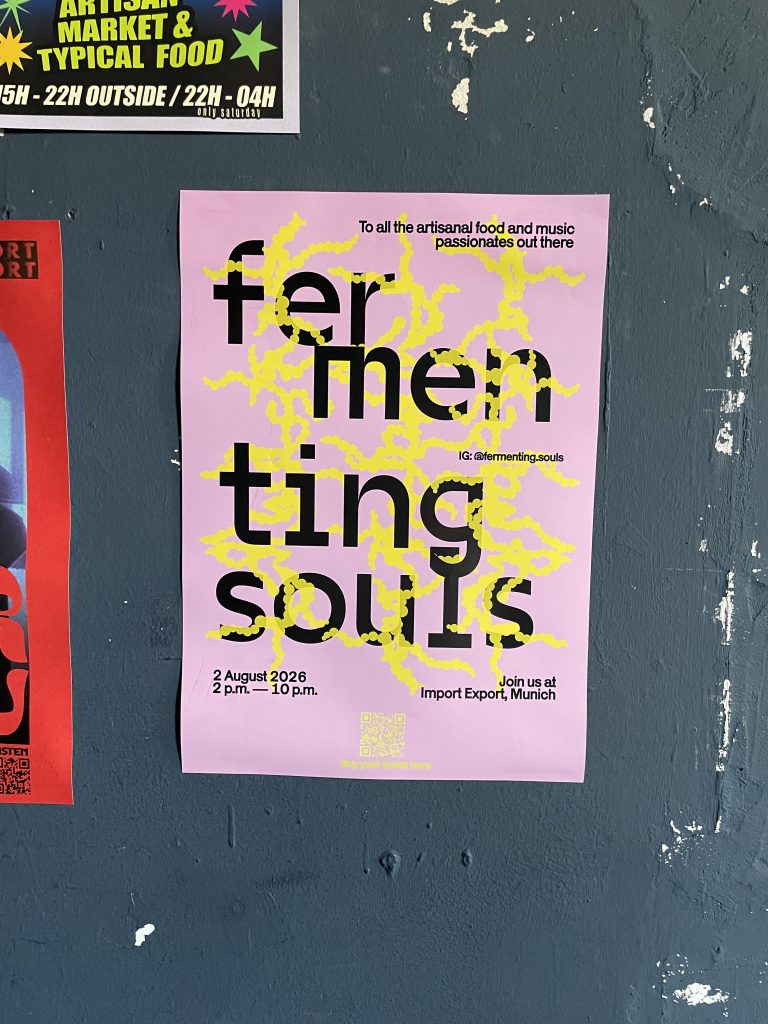
Photo: Mara Linden
After the talks, there is time for us to mingle on the market and enjoy the music. I try a variety of natural wines by Forever Thirsty that taste great but in some cases, so unlike wine in the classic sense – much more tangy, sour, or even reminding me of olives and herbs. I then turn to the Mindful Drinking Club’s stall to test out some non-alcolholic drinks, such as a lactic-acid fermented drink that is called and tastes like a walk through a forest, with a hint of fresh pine, birch and citrus. There are also many pickles, ferments and breads to try, and the colours and flavours are great to see, smell and taste. It’s exciting to see the breadth of fermented products in real life, and to chat to engaged and curious people who share the interest in ferments. Supplementing the festival with a perspective inspired by academic research and fermentation practice was great fun, and it also gave us as researchers the chance to give a wider audience insights into what a social science of fermentation and microbes is doing. To more such opportunities to make science communication fun – thanks for having me!
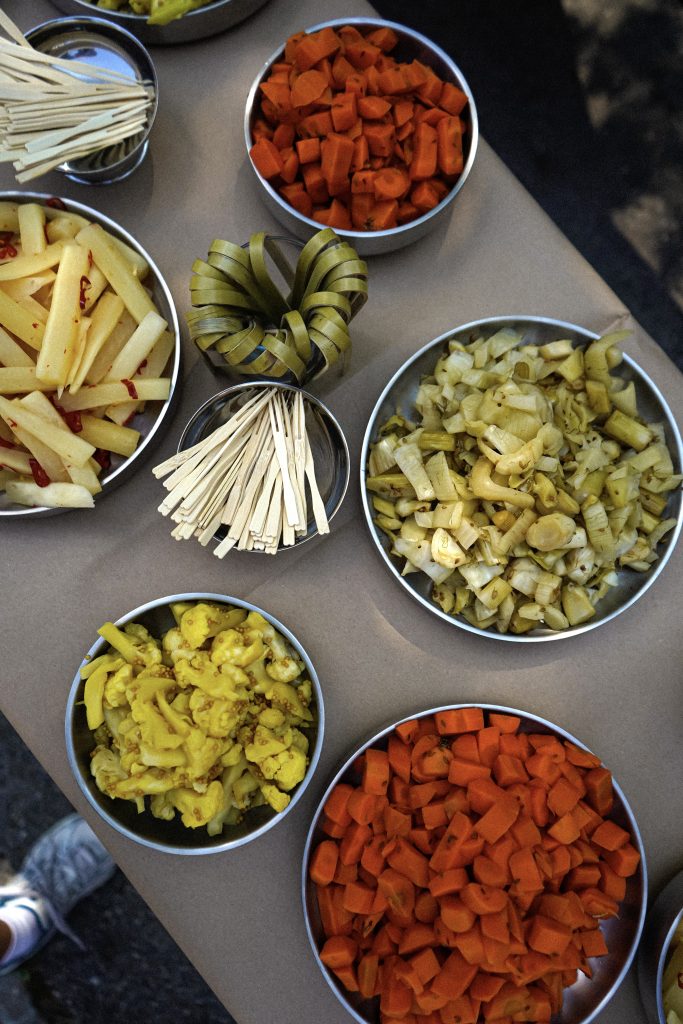
Photos: Darja Voloshina/Fermenting Souls
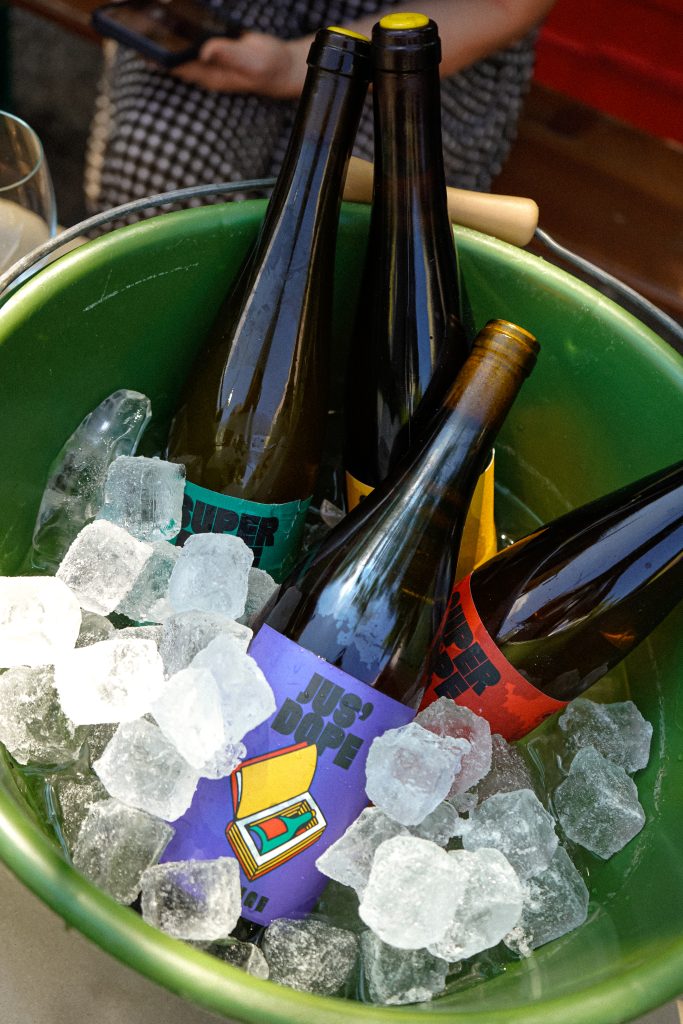
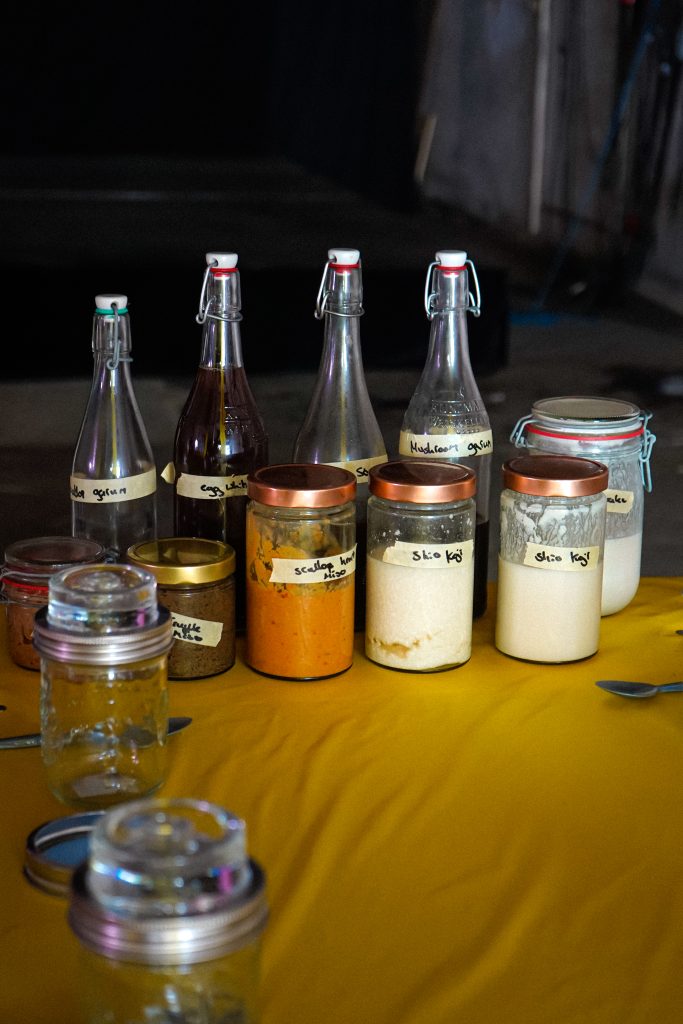
Info: Fermenting Souls, Munich; organised by Andrea Brunello, Leandro D’Introno, Martin Heusch, Darja Voloshina and many more volunteers.
See also: Interview in Süddeutsche Zeitung about the festival, 15 July 2026